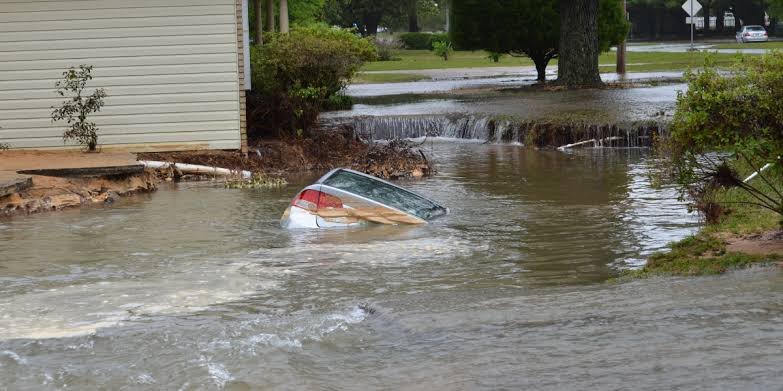
Natural disasters don’t announce themselves with convenient timing. A cyclone makes landfall at midnight. A flood submerges a ground-floor home over a weekend. The immediate hours are consumed by survival, evacuation, and keeping family safe. Insurance is the last thing on your mind — and then, once the water recedes and the winds calm, it becomes urgent.
The challenge is that the claims process for natural disaster damage is time-sensitive, documentation-heavy, and unforgiving of procedural errors made in the fog of crisis. Understanding what to do, in what order, before a disaster strikes is what separates a smooth claim settlement from a protracted, disputed, partially paid one.

The Policies That Respond to Natural Disasters
Before getting to the claims process, clarity on which policies respond to which losses is essential — because natural disaster damage affects multiple asset categories and different insurance products cover each.
A standard home insurance or householder’s policy covers structural damage to your building and contents damage from natural calamities including flood, cyclone, earthquake, and storm. Motor insurance under a comprehensive policy covers flood and cyclone damage to your vehicle under the Own Damage section. Business premises and commercial assets are covered under a Standard Fire and Special Perils policy, which explicitly includes natural calamities. For farmers, PMFBY covers crop losses from cyclone and flood as discussed in the earlier article in this series.
Knowing which policy covers which asset means you can simultaneously initiate multiple claims across different insurers rather than sequentially discovering coverage one loss at a time.
Immediate Steps: The First 48 Hours
Notify your insurer immediately. Every policy has a mandatory claim notification window — typically 24 to 48 hours from the date of loss or discovery of damage. Natural disaster events are well-documented through government advisories and media reporting, so the date of the calamity is rarely disputed. But notification must still happen within the required window. Call your insurer’s claims helpline, send a written notification by email, or file through their app — and obtain a reference number for every contact.
Document everything before cleaning up. This is the instruction that feels counterintuitive in the middle of a disaster aftermath but is the most financially important action you can take. Before removing waterlogged items, before repairing broken windows, before draining flooded rooms — photograph and video record everything. Every room, every damaged item, every visible structural damage, every affected vehicle. This visual record is the foundation of your claim.
Photograph items with context — a waterlogged sofa next to visible water marks on the wall establishes both the damage and the flood height. A cracked wall with debris around it documents cyclone structural damage. The more comprehensive this record, the weaker the argument for claim reduction on grounds of inadequate evidence.
List all damaged items with estimated values. For contents claims, a written inventory of every damaged item — description, approximate age, original purchase price if known, and estimated replacement cost — forms the basis of your contents claim. Bank statements, purchase receipts, warranty cards, and photographs of items in use before the disaster all strengthen this inventory.
The Survey Process
After notification, the insurer appoints a licensed surveyor to assess the damage. For natural calamity claims, surveyors operate under significant volume pressure — particularly in the immediate aftermath of a large-scale event affecting multiple policyholders simultaneously.
Be available for the survey and accompany the surveyor through the premises. Point out every damage category — structural, contents, fixtures, embedded systems. Do not conduct significant repairs before the survey unless safety requires it — if you must repair something urgently, document it thoroughly before and after. Repairs completed before surveyor inspection can be treated as evidence that the damage wasn’t as severe as claimed.
Ask the surveyor for their assessment report reference and timeline for submission to the insurer. Follow up if the report is not submitted within a reasonable period — survey delays are one of the most common causes of settlement timelines extending beyond what is necessary.
Documents Required for Claim Filing
The complete documentation package typically required includes the filled claim form, policy document copy, FIR or government disaster notification as proof of the calamity event, the photographic and video damage record, the itemised loss inventory for contents claims, repair estimates from licensed contractors, bank statements or receipts supporting item values, and for motor claims, the vehicle registration certificate and driving licence.
For flood-specific motor claims, the engine protection add-on — if taken — covers hydrostatic lock damage from water ingestion into the engine. Without this add-on, engine damage from flooding is a standard exclusion. Check whether this add-on exists in your policy before the survey — it determines whether the most expensive component of flood vehicle damage is covered.
Dealing With Underinsurance in Property Claims
One of the most common and frustrating outcomes of natural disaster claims is discovering at settlement that the sum insured was inadequate — that the property was insured for significantly less than its current reconstruction cost or the contents for less than their replacement value.
When underinsurance is identified, most property insurance policies apply the average clause — the insurer pays only the proportional share of the loss corresponding to the ratio of sum insured to actual value. If your home is worth ₹60 lakh in reconstruction value but insured for ₹30 lakh, and the flood damage is ₹15 lakh, the insurer pays 50% — ₹7.5 lakh. You bear ₹7.5 lakh out of pocket despite holding an active policy.
Review your sum insured annually and update it to reflect current construction and replacement costs — particularly in inflation environments where property and materials costs have risen significantly.
Frequently Asked Questions (FAQs)
Q1. What if the insurer delays appointing a surveyor after my notification?
IRDAI mandates that insurers appoint a surveyor within 72 hours of receiving a claim notification. If this timeline is not met, file a written follow-up with the insurer referencing the regulatory requirement. If the delay continues beyond a reasonable period, escalate through the insurer’s grievance mechanism and IRDAI’s IGMS portal. Document all follow-up communications with dates and reference numbers.
Q2. My vehicle was swept away by flooding and not recovered. Is this covered as total loss?
If your comprehensive motor policy includes flood coverage under Own Damage — which standard comprehensive policies do — a vehicle rendered unrecoverable or a total loss due to flooding is treated similarly to theft in terms of claim process. You file an FIR, obtain a non-traceable certificate if applicable, and the insurer settles on IDV basis after the standard investigation. The IDV at the time of loss, less any applicable compulsory excess, is the settlement amount.
Q3. Can I start repair work before the surveyor completes the assessment?
For safety-critical repairs — structural instability, water contamination removal, electrical hazards — immediate action is justified. Document everything comprehensively before any repair begins. Inform your insurer in writing before making emergency repairs, noting the safety justification. For non-urgent repairs, wait for the survey. The surveyor’s assessment of pre-repair damage is more straightforward and leaves less room for dispute than assessing damage after partial repairs have been completed.
Q4. Is damage to documents, cash, and jewellery covered under a home insurance claim for flood damage?
Cash and documents are either excluded or covered up to very low sub-limits in standard home insurance policies. Jewellery is typically covered subject to a specific sub-limit — often 10% to 25% of the contents sum insured — and may require a prior valuation certificate or purchase receipt to support the claim. High-value jewellery is better protected through a separate jewellery floater policy than relied upon under a home contents claim.
Q5. What government assistance is available alongside insurance claims after a declared natural disaster?
State governments activate the State Disaster Response Fund for declared calamities, providing ex-gratia payments, relief materials, and in some cases housing assistance. These government payments are not deducted from insurance claim settlements — both sources of relief are independent and can be accessed simultaneously. Register with your local authorities for government relief even while pursuing your insurance claim to ensure you access all available support.