Your credit score is a three-digit number that carries more influence over your financial life than most people realise until the moment it works against them. It determines whether you get the loan you applied for, the interest rate you’re offered, the credit card limit you’re assigned, and increasingly, other assessments that extend beyond formal lending.
Understanding what drives your score — and more importantly, what specific actions move it from a struggling 600 to a lender-favoured 750 or above — is one of the highest-return financial education investments you can make.
What a Credit Score Is and How It’s Calculated
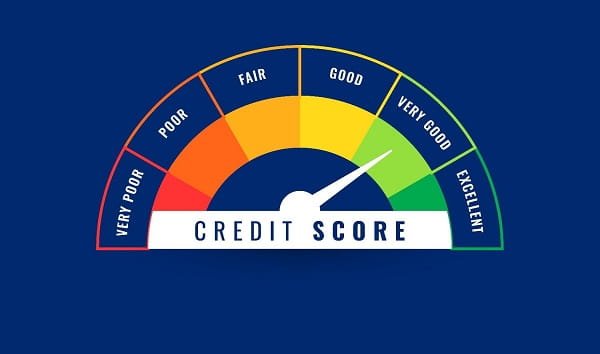
A credit score in India is most commonly a CIBIL score — calculated by TransUnion CIBIL, one of four RBI-licensed credit information bureaus alongside Experian, Equifax, and CRIF High Mark. The score ranges from 300 to 900. Scores above 750 are considered good by most lenders. Scores above 800 are excellent. Below 650 is where loan approvals become difficult and interest rates become punishing.
The score is calculated from your Credit Information Report — the complete record of every credit product you’ve ever held, every payment you’ve made or missed, every enquiry made by a lender when you applied for credit, and the current status of every active credit account.
Five primary factors drive the calculation. Payment history — whether you pay on time — is the single largest factor, accounting for approximately 35% of the score. Credit utilisation — how much of your available credit limit you’re using — contributes around 30%. Length of credit history — how long your oldest account has been open — adds approximately 15%. Credit mix — the variety between secured and unsecured credit — contributes around 10%. And new credit enquiries — how often you’ve recently applied for credit — account for the remaining 10%.
Why Scores Sit at 600: The Common Causes
A score in the 580 to 650 range typically reflects one or more of the following situations. Missed or delayed EMI payments in the past twelve to twenty-four months. High credit card utilisation — consistently using 70% to 90% of the available credit limit. Multiple loan or credit card applications in a short period, generating numerous hard enquiries. A thin credit file with very few credit accounts and a short history. Or an account that has defaulted and been settled — where the settlement itself is recorded negatively even if the outstanding was technically cleared.
Understanding which of these applies to your specific situation is the starting point. Obtain your CIBIL report — the full report, not just the score — and read it carefully. Identify negative entries, their dates, and their current status.
The Actions That Move the Score Fastest
Eliminate payment delays immediately and completely. Payment history is the highest-weighted factor. Set standing instructions or automatic payments for every EMI and credit card minimum due, ensuring no payment is ever late from this point forward. The positive impact of consistent on-time payment begins to show within three to six months and compounds over time.
Reduce credit card utilisation below 30%. If you hold a credit card with a ₹1 lakh limit and regularly carry a balance of ₹70,000, your utilisation is 70% — which significantly depresses the score. Pay down the balance to below ₹30,000 — ideally below ₹20,000 — and maintain it there. If paying down is not immediately possible, requesting a credit limit increase from your card issuer achieves the same mathematical outcome on the utilisation ratio, provided you don’t increase spending in parallel.
Dispute errors in your credit report. Credit bureau reports contain errors more frequently than most people assume — payments recorded as missed when they were made, accounts that don’t belong to you, incorrect outstanding balances. Identify every inaccuracy and raise a dispute with the credit bureau and with the lending institution that reported incorrectly. Corrected errors can produce score improvements of 20 to 50 points in the reporting cycle.
Do not apply for multiple credit products simultaneously. Every hard enquiry — triggered when a lender pulls your bureau report for a loan or card application — reduces the score marginally. Multiple enquiries in a short window signal credit-seeking behaviour and can cost 15 to 25 points cumulatively. If you’re actively working on score improvement, avoid new credit applications for at least six months.
Keep old credit accounts open. The length of credit history factor rewards accounts with long histories. Closing your oldest credit card — even one you rarely use — shortens your average account age and negatively impacts the score. Keep old accounts active with minimal usage rather than closing them.
Add a secured credit product if your file is thin. For borrowers with very limited credit history, a secured credit card — backed by a fixed deposit — or a small consumer durable loan creates an active credit account whose regular repayment builds history rapidly. Thin-file improvement can be among the fastest score movements when consistent repayment is maintained.
Realistic Timeline for 600 to 750+
With disciplined execution of the above actions — zero payment delays, utilisation below 30%, errors disputed and corrected, no new enquiries — a score of 600 can realistically reach 700 within six to nine months. Reaching 750 or above from 600 typically takes twelve to eighteen months of consistent behaviour, depending on the severity and recency of the negative entries on the report.
There are no legitimate shortcuts that produce overnight results. Services that claim to “fix” credit scores quickly are either referring to the legitimate error dispute process — which you can do yourself for free — or are making claims that cannot be delivered. Time and consistent behaviour are the only genuine accelerants.
Frequently Asked Questions (FAQs)
Q1. How often is my CIBIL score updated?
A: Lenders report your account status and payment information to credit bureaus on a monthly basis — typically within 30 to 45 days of each month’s payment due date. This means the impact of a positive action — clearing a large balance, making consistent on-time payments — is reflected in your score within one to two monthly reporting cycles. Score improvement is not instant but is relatively responsive to genuine behavioural change.
Q2. Does checking my own credit score affect it?
A: No. When you access your own credit report or score — through CIBIL’s official website or through authorised free-check platforms — it is recorded as a soft inquiry, which has no impact on your score. Only hard inquiries — generated when a lender pulls your report as part of a credit application — affect the score. Checking your own score monthly to track progress is a healthy habit with no credit cost.
Q3. Will settling an outstanding loan improve my score immediately?
A: Settlement — where the lender agrees to accept less than the full outstanding amount — is recorded as “settled” rather than “closed” in your credit report. A settled account is viewed negatively by lenders because it indicates the full contractual obligation was not met. The settled status typically remains on your report for seven years. Wherever possible, pay the full outstanding rather than negotiating a settlement — a “closed” status is significantly better for your credit profile than “settled.”
Q4. I have no credit history at all — is a zero score the same as a bad score?
A: A zero score — technically NH or NA on the CIBIL report — means no history rather than bad history. Some lenders treat this with caution because there’s no repayment track record to evaluate. It is different from a low score but can still result in loan rejections at conservative lenders. Building a thin file through a secured credit card or a small consumer loan is the recommended starting point for credit-file establishment.
Q5. Can a single missed EMI payment significantly drop my score?
A: Yes. A payment that is thirty or more days overdue is reported as a delinquency and can reduce a good score by 50 to 100 points in a single reporting cycle. The more recent the missed payment and the higher the original score, the larger the drop tends to be — because more is at stake in a good score’s history than in a score already reflecting multiple issues. This asymmetry — the ease with which a good score is damaged versus the time required to rebuild it — is the most compelling argument for setting up automatic payments before relying on memory.
The Bottom Line
Across all three articles in this set, the consistent theme is information turning into financial advantage. Tracking your loan application converts uncertainty into action. Choosing a gold loan over a personal loan when gold is available converts familiarity bias into meaningful interest savings. And understanding and actively managing your credit score converts a passive number into a deliberately constructed financial asset. In every case, the tools are available, the information is accessible, and the outcomes reward the borrower who engages rather than the one who simply accepts whatever the system offers.