India’s economic narrative is often told through its cities — the startup hubs, the IT corridors, the urban consumption boom. But the more quietly transformative economic story of the past two decades has unfolded in its villages, semi-urban clusters, and district towns, where millions of small entrepreneurs — weavers, potters, tailors, vegetable vendors, dairy farmers, and repair technicians — have built and sustained livelihoods with limited access to formal financial systems.
At the centre of this story is a financial product whose simplicity belies its impact: the micro-loan. Small, targeted, often collateral-free, and increasingly delivered through digital infrastructure that reaches the last mile — micro-loans have done more to expand economic participation at India’s grassroots than almost any other formal financial instrument.
What Micro-Loans Are and How They Differ From Regular Loans
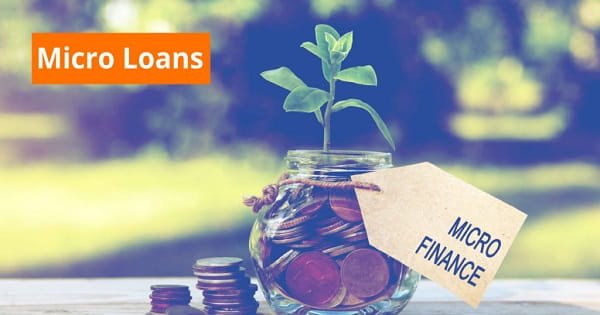
A micro-loan is a small-value loan — typically ranging from ₹5,000 to ₹3 lakh — extended to individuals or small groups in low-income segments, primarily for income-generating activities. The defining characteristics are loan size, simplified eligibility assessment, group or individual liability structures, and accessibility to borrowers who would not qualify under conventional lending criteria.
Micro-loans are extended by Microfinance Institutions — MFIs — NBFC-MFIs regulated by the RBI, Small Finance Banks, Regional Rural Banks, Co-operative Banks, and through government-backed schemes including MUDRA Yojana. The regulatory framework governing NBFC-MFIs was substantially revised in 2022, with RBI extending the MFI definition to cover all lenders offering collateral-free loans to low-income households and harmonising the regulatory treatment across lender types.
The Group Lending Model: Why It Works
The most distinctive feature of traditional microfinance lending — inherited from the Grameen Bank model pioneered in Bangladesh — is group lending. Borrowers form self-help groups or joint liability groups of five to twenty members. The group collectively guarantees the repayment of each member’s loan — not through legal instrument but through social accountability.
When a member defaults, the group’s collective access to future loans is affected. This social pressure mechanism replaces the collateral requirement that conventional lenders depend on. For rural borrowers without land titles, formal employment, or documented income, group lending creates access to formal credit that would otherwise be structurally unavailable.
The repayment discipline in well-functioning SHG-linked lending programmes has been remarkable — microfinance portfolio quality in India, measured by non-performing asset ratios, has historically compared favourably with several other retail lending categories, reflecting the powerful incentive that social accountability creates.
Key Schemes and Institutions Serving Rural Entrepreneurs
MUDRA Yojana remains the most widely accessed formal micro-credit programme in India. Its three tiers — Shishu up to ₹50,000, Kishore from ₹50,000 to ₹5 lakh, and Tarun from ₹5 lakh to ₹10 lakh — serve the full range of small enterprise needs from a street vendor’s initial working capital to a small manufacturing unit’s machinery investment. MUDRA loans are collateral-free and available through banks, NBFCs, and MFIs.
SHG-Bank Linkage Programme — managed by NABARD — has linked over ten crore women-led Self Help Groups to formal banking credit over the past three decades. Groups save collectively, build a track record of internal lending, and then access bank credit at multiples of the group’s savings corpus. The interest rates under bank linkage are among the most affordable available to rural borrowers — typically eight to twelve percent annually.
PM SVANidhi Scheme specifically targets urban and semi-urban street vendors with working capital loans starting at ₹10,000, increasing to ₹20,000 and ₹50,000 based on repayment history. Digital repayment incentives — cashback for UPI transactions — embedded in the scheme design promote financial literacy alongside credit access.
NBFC-MFI sector — including Bandhan Financial Services before its bank conversion, CreditAccess Grameen, Spandana Sphoorty, Arohan Financial Services, and dozens of regional MFIs — collectively serves over six crore borrowers across rural and semi-urban India, with loan sizes and tenures calibrated to agricultural and informal income cycles.
Digital Infrastructure Changing Last-Mile Delivery
The convergence of Aadhaar-based KYC, UPI-based disbursement and collection, and smartphone penetration even in remote areas has transformed the logistics of micro-lending. Loan officers who previously required physical presence for each disbursement and collection can now service larger borrower pools through digital verification and payment rails.
Business Correspondents — bank-appointed local representatives who act as mobile banking extensions in areas without physical branches — have been integrated into the micro-loan delivery chain. A Business Correspondent in a village of five hundred households can onboard new borrowers, process MUDRA applications, and facilitate SHG bank linkage without the borrower making a branch visit.
This digital-physical hybrid model has significantly reduced the per-loan transaction cost for lenders, which in competitive markets should translate to lower borrowing costs for rural entrepreneurs.
The Interest Rate Reality and Responsible Borrowing
Honesty requires acknowledging that micro-loans are not cheap credit. NBFC-MFI lending rates typically range from eighteen to twenty-six percent annually. The high rates reflect genuinely higher operational costs — smaller loan sizes mean each rupee lent costs more to administer than in large-ticket lending — and the elevated credit risk of lending to borrowers without formal income documentation.
RBI’s revised microfinance framework requires lenders to disclose the annualised interest rate and all charges in a standardised format, giving borrowers the information to compare costs. For rural entrepreneurs evaluating a micro-loan, the critical calculation is whether the return on the activity being financed exceeds the interest cost. A vendor whose daily income increases by ₹200 per day from a ₹30,000 micro-loan used to expand inventory is generating a return that comfortably justifies even a twenty-two percent annual rate. A borrower using the same loan for consumption smoothing rather than income generation creates a repayment burden without a corresponding income increase.
Responsible micro-borrowing is income-activity linked. Borrowing for productive purposes that generate returns above the loan cost is wealth-building. Borrowing for consumption against micro-loan terms creates vulnerability rather than resilience.
Frequently Asked Questions (FAQs)
Q1. How does a rural entrepreneur without a bank account access micro-loan products?
A: Most micro-lending delivery models begin with basic savings account opening — either through Business Correspondents using Aadhaar-based eKYC or at a nearby bank branch. Many micro-loan programmes require a functional bank account for disbursement and collection. The Jan Dhan Yojana account opening drive has substantially reduced the unbanked population, and most rural adults today have access to at least a basic savings account. Where gaps persist, Business Correspondents and Common Service Centres can facilitate account opening as the first step before loan access.
Q2. Can a rural woman with no income proof get a micro-loan?
A: Yes. Micro-loans — particularly those extended through SHG-bank linkage and NBFC-MFI channels — are specifically designed for borrowers without formal income documentation. Eligibility is assessed through SHG membership track record, group savings behaviour, the purpose of the loan, and the group’s collective credit history. Individual income proof is not a prerequisite for most micro-loan products targeted at this segment.
Q3. What is the maximum loan amount available under the SHG-bank linkage programme?
A: The loan amount available to an SHG member through bank linkage is typically a multiple of the group’s savings corpus — most banks extend credit of four to eight times the group’s total savings, distributed among members. Individual member access depends on the group’s loan allocation decisions. For established groups with multi-year track records, bank linkage credit can extend to ₹1 lakh or more per member in well-managed programmes.
Q4. Are there micro-loan products specifically designed for agricultural input financing?
A: Yes. Kisan Credit Card — KCC — is the primary agricultural credit product that functions as a revolving micro-credit facility for crop input costs — seeds, fertilisers, pesticides, and labour. KCC credit limits are based on land holding, crop type, and input cost estimates. Interest rates on KCC are subsidised at four percent for timely repayers through the government’s interest subvention scheme. For small and marginal farmers, KCC represents one of the most affordable formal credit products available anywhere in the Indian lending landscape.
Q5. How does over-indebtedness happen in micro-lending and how can borrowers protect themselves?
A: Over-indebtedness in micro-lending typically occurs when borrowers take loans from multiple MFIs simultaneously — a problem that became acute in specific regions during periods of aggressive MFI expansion. RBI’s current regulations cap total indebtedness of an MFI borrower at ₹3 lakh across all MFI lenders and limit the number of MFI lenders a borrower can have simultaneously. Credit bureau reporting by all regulated MFIs enables lenders to verify multiple borrowing before extending fresh credit. Borrowers protect themselves by borrowing only for specific, productive purposes, limiting total EMI obligations to a manageable share of household income, and avoiding borrowing from multiple sources to repay existing loans — a cycle that consistently ends in financial distress.
The Bottom Line
Both articles in this set address different ends of the lending spectrum — from the largest single loan most Indian families will ever hold to some of the smallest. Yet the same analytical discipline applies at both ends. For the home loan balance transfer, the question is whether the interest saving over the remaining tenure exceeds the switching cost — with the mathematics almost always favouring the transfer when the rate difference is meaningful and sufficient tenure remains. For the rural micro-loan, the question is whether the productive return on the borrowed capital exceeds its cost — with the answer almost always yes when the loan is genuinely activity-linked. In both cases, the borrower who calculates before committing makes a categorically better financial decision than the one who acts on assumption.