India’s workforce is vast, diverse, and largely dependent on organised-sector employment for long-term financial stability. Yet, without structured savings and insurance mechanisms, millions of workers would retire without adequate financial security. This is where the Employees’ Provident Fund Organisation (EPFO) plays an irreplaceable role.
Established under the EPF & Miscellaneous Provisions Act, 1952, EPFO is one of the world’s largest social security organisations. It manages provident fund savings, pension benefits, and life insurance cover for over 7 crore active subscribers across India. In 2026, EPFO continues to evolve – embracing digital transformation, expanding coverage, and strengthening its three-pillar protection framework to secure the financial future of Indian employees.
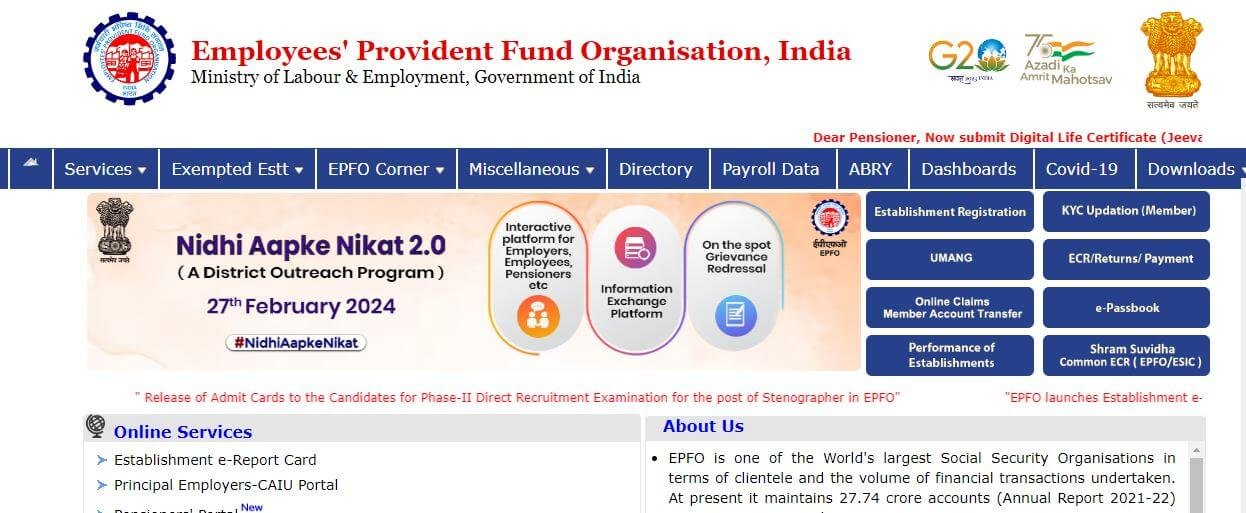
This article explores in depth how EPFO protects employees through its three core schemes, the scale of its impact, and why every salaried professional should understand and maximise their EPFO benefits.
The Scale of EPFO – Protecting Millions of Indians
To understand EPFO’s impact, consider its sheer size and reach:
|
EPFO at a Glance |
Figure (2026) |
|
Active Members (Subscribers) |
Over 7 Crore |
|
Registered Establishments |
Over 7.5 Lakh |
|
Corpus Under Management |
Over Rs. 20 Lakh Crore |
|
Annual ECR Filings |
Crores of transactions processed yearly |
|
Current EPF Interest Rate (2024-25) |
8.25% per annum |
|
Maximum EDLI Insurance Benefit |
Rs. 7,00,000 |
These numbers reflect EPFO’s position as the bedrock of financial protection for India’s organised workforce. From factory workers and IT professionals to healthcare staff and educators, EPFO’s safety net spans virtually every sector of the Indian economy.
The Three Pillars of EPFO’s Financial Protection
EPFO’s financial protection framework rests on three distinct but complementary schemes, each serving a specific purpose in an employee’s financial lifecycle:
|
Scheme |
Purpose |
Key Benefit |
|
EPF – Employees’ Provident Fund |
Long-term retirement savings |
Lump sum corpus + interest at 8.25% p.a. |
|
EPS – Employees’ Pension Scheme |
Monthly pension after retirement |
Pension from age 58 for 10+ years of service |
|
EDLI – Employees’ Deposit Linked Insurance |
Life insurance cover for employees |
Up to Rs. 7 lakh insurance to nominee on death |
Pillar 1: Employees’ Provident Fund (EPF) – Building Retirement Wealth
The EPF scheme is the foundation of EPFO’s financial protection. Under EPF, both the employee and employer contribute 12% of the employee’s basic salary and Dearness Allowance every month. Of the employer’s 12% contribution, 3.67% goes into the EPF account and the remaining 8.33% is diverted to the Employees’ Pension Scheme (EPS).
The accumulated EPF corpus earns a government-guaranteed interest rate – currently 8.25% per annum for 2024-25 – compounded annually. This makes EPF one of the safest and most rewarding long-term savings instruments in India, surpassing the returns of most fixed deposits and small savings schemes while offering complete capital safety.
Over a 30-year career, consistent EPF contributions can accumulate into a substantial retirement corpus, providing financial independence in old age. The tax benefits are equally compelling: contributions, interest earned, and the final withdrawal are all exempt from income tax under the EEE (Exempt-Exempt-Exempt) category, subject to prescribed conditions.
Pillar 2: Employees’ Pension Scheme (EPS) – Ensuring Regular Income After Retirement
While EPF provides a lump sum at retirement, EPS addresses the equally critical need for a regular monthly income. Under EPS, the employer’s 8.33% contribution (on a wage ceiling of Rs. 15,000) is pooled into a pension fund managed by EPFO. The employee makes no separate contribution to EPS.
After completing a minimum of 10 years of qualifying service and reaching the age of 58, an EPFO member becomes entitled to a monthly pension for life. The pension amount is calculated using a formula based on pensionable salary and years of service. Additionally, EPS provides early pension options, disability pension, widow/child pension, and nominee benefits – making it a comprehensive pension safety net.
The portability of EPS through the UAN system ensures that service years are not lost when employees switch employers, giving workers the freedom to build careers across organisations without sacrificing their pension entitlement.
Pillar 3: Employees’ Deposit Linked Insurance (EDLI) – Protecting Families Against Uncertainty
Life is unpredictable, and the sudden loss of a breadwinner can devastate a family financially. EPFO’s EDLI scheme provides automatic life insurance coverage to all active PF members, funded entirely by employer contributions at 0.50% of wages.
In the event of an employee’s death during active service, the nominee or legal heir receives a lump sum insurance benefit of up to Rs. 7,00,000. No medical examination, separate enrolment, or premium payment by the employee is required. The insurance is active from day one of EPFO membership, ensuring that every covered employee’s family has a financial safety net regardless of when tragedy strikes.
This feature is especially vital for employees in the early stages of their careers, where personal insurance coverage may be limited or unaffordable, and where the financial burden of the employee’s loss on the family is greatest.
EPFO’s Digital Initiatives – Making Protection More Accessible
EPFO has undertaken significant digital transformation to make its services faster, transparent, and accessible to every member:
- Universal Account Number (UAN): A single, portable account number that stays with the employee across all jobs, simplifying PF transfers and account management.
- Unified Member Portal: 24×7 online access to passbook, balance, claims, and KYC updates – eliminating the need to visit EPFO offices.
- UMANG App: Mobile access to all EPFO member services including balance check, claim filing, and passbook download on Android and iOS.
- Aadhaar-Based Online Claims: Instant PF withdrawals up to Rs. 1 lakh for Aadhaar-linked and KYC-compliant accounts, credited directly to bank accounts.
- Automated Claim Settlement: AI-assisted claim processing has dramatically reduced settlement time, with most claims settled within 3-7 working days in 2026.
- SMS & Email Alerts: Members receive real-time SMS notifications for every contribution credit, claim update, and KYC approval.
These digital tools have transformed EPFO from a paperwork-heavy organisation into a responsive, technology-driven social security institution, making financial protection genuinely accessible to every enrolled employee.
Why EPFO Matters for Every Indian Employee?
Many employees, especially younger workers, view PF deductions as a salary reduction rather than a financial asset. This perspective overlooks the enormous long-term value that EPFO membership creates:
- Disciplined savings: Monthly contributions enforce a savings habit that builds wealth over decades without requiring active effort.
- Employer co-contribution: Employers match employee contributions, effectively doubling the monthly investment into the retirement corpus.
- Guaranteed returns: The government-backed interest rate provides predictable growth, insulated from stock market volatility.
- Tax efficiency: The EEE tax status makes EPF one of the most tax-efficient savings vehicles available in India.
- Multi-layered protection: EPF, EPS, and EDLI together cover retirement savings, monthly pension, and life insurance in a single mandatory scheme.
- Partial withdrawal flexibility: Funds are accessible in genuine financial emergencies such as medical crises, home purchase, or education needs.
For the vast majority of Indian employees in the organised sector, EPFO contributions will be the single largest retirement asset they accumulate over their working lives. Understanding and maximising this benefit is one of the most impactful financial decisions any employee can make.
Frequently Asked Questions (FAQs)
1. Who is eligible to become an EPFO member?
Any employee working in an establishment with 20 or more employees and earning a basic salary of up to Rs. 15,000 per month is mandatorily covered under EPFO. Employees earning above Rs. 15,000 can also opt for voluntary coverage. Once enrolled, membership continues even if the salary exceeds the threshold. Employees across industries – factories, IT firms, educational institutions, hospitals, and more – are covered under the EPF & MP Act, 1952.
2. How is the EPF interest rate decided, and what is the current rate?
The EPF interest rate is recommended annually by the Central Board of Trustees (CBT) of EPFO, based on the returns earned by EPFO through its investments in government securities, bonds, and ETFs. The recommendation is then ratified by the Ministry of Finance. For the financial year 2024-25, the EPF interest rate has been set at 8.25% per annum – one of the highest guaranteed, tax-free returns available in India. Interest is credited to member accounts at the end of each financial year.
3. Can an employee withdraw PF before retirement?
Yes, EPFO allows partial and full PF withdrawals under specific circumstances before the age of 58. Partial withdrawals (PF Advance) are permitted for purposes such as medical emergencies, purchase or construction of a house, higher education of children, marriage expenses, and natural calamities. Full withdrawal is allowed when an employee is unemployed for more than 2 months or upon retirement. Since 2017, online claims through the Unified Member Portal or UMANG app have made the withdrawal process significantly faster and paperless.
4. What happens to the EPS pension if an employee changes jobs?
EPS (Employees’ Pension Scheme) benefits are fully portable through the UAN system. When an employee changes jobs, their pension service is seamlessly transferred to the new establishment by submitting Form 13 (PF Transfer) or through the online transfer claim process on the EPFO portal. The total years of pensionable service across all employers are accumulated. To become eligible for a monthly EPS pension, the employee must have completed a minimum of 10 years of qualifying service and must have reached the age of 58.
5. Is the EDLI insurance benefit available to all EPFO members?
Yes, the Employees’ Deposit Linked Insurance (EDLI) scheme provides life insurance coverage automatically to all active EPFO members at no cost to the employee. The entire EDLI premium (0.50% of wages) is contributed solely by the employer. In the unfortunate event of an employee’s death during active service, the nominee or legal heir is entitled to receive a lump sum insurance benefit of up to Rs. 7,00,000, calculated based on the last 12 months’ average PF wages. No separate application or medical examination is required to enrol in EDLI.
Conclusion
EPFO is far more than a mandatory payroll deduction – it is a comprehensive financial protection system that builds retirement wealth, ensures pension income, and provides life insurance cover for millions of Indian families. Through its three-pillar framework of EPF, EPS, and EDLI, and backed by continuous digital innovation, EPFO has become the most accessible and reliable social security institution in India.
For employees, the message is clear: stay informed about your EPF account, keep your UAN and KYC updated, monitor your passbook regularly, and plan your withdrawals wisely. For employers, fulfilling EPFO obligations on time is not just a legal duty but an investment in the financial security and loyalty of your workforce. In 2026 and beyond, EPFO remains the most dependable guardian of the financial future of Indian employees.
Disclaimer: This article is for informational purposes only. For specific financial or legal advice, please consult a qualified professional or visit the official EPFO website at www.epfindia.gov.in.