Filing a valid EPF nomination is one of the most consequential — and most neglected — financial decisions a working person can make. Without a proper nominee on record, your family could wait months or years to receive your EPF corpus after your death. The rules around who can be a nominee, how many you can nominate, and what share each gets are clear and specific. Here is everything you need to know.
Who Can Be an EPF Nominee?
Under Para 33 of the Employees’ Provident Fund Scheme, 1952, nomination is governed by the concept of “family” as defined in the Act. A nominee must be a family member, defined as:
- Spouse (husband or wife)
- Children (including adopted children)
- Parents (father and mother of the EPF member)
- Stepchildren
- Widowed daughters
- Brothers, sisters, and their families — only if the member has no other family as defined above
If an EPF member has a spouse, children, or parents, they cannot nominate a sibling, friend, or any non-family member. The nomination must be within the defined “family” category.
Can You Nominate Multiple People?
Yes. You can nominate more than one family member and specify the percentage share each nominee will receive. The total percentage across all nominees must add up to exactly 100%. For example, you can nominate your spouse with 60%, your elder child with 25%, and your younger child with 15%.
Nomination When There Is No Family
If an EPF member genuinely has no family — unmarried, no living parents, no children — they can nominate any person of their choice, including a friend or distant relative. However, once the member acquires a family (gets married, or has children), the earlier nomination of a non-family person becomes invalid automatically. The member must update their nomination to reflect a family member.
Nomination Rules for Married Employees
After marriage, the spouse is automatically included in the definition of “family” under EPF. A nomination made before marriage to parents or siblings remains valid until the member explicitly updates it — but it is strongly advisable to update after marriage to include the spouse. Technically, upon marriage, a nomination of parents does not automatically become invalid, but EPFO may prioritise the spouse’s claim in the event of a dispute.
Minor Nominees
Minors (under 18 years) can be named as EPF nominees. However, you must also appoint a guardian who will manage the funds on behalf of the minor until they turn 18. The guardian’s details must be provided in the nomination form. On attaining majority, the nominee can directly claim the funds.
How to File or Update EPF Nomination
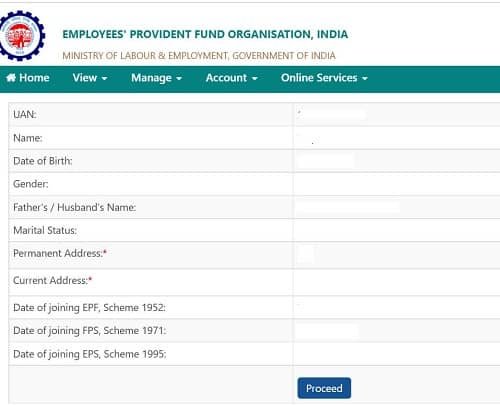
- Log in to the EPFO Unified Member Portal (unifiedportal-mem.epfindia.gov.in)
- Go to Manage > e-Nomination
- Add or update family member details with Aadhaar numbers
- Assign percentage shares (must total 100%)
- e-Sign using Aadhaar OTP to submit
The process takes under 15 minutes if your KYC is complete. Download the acknowledgment after submission.
What Happens If No Nomination Is Filed?
Without a valid nomination, the EPF balance is paid to the surviving members of the EPF family as defined by law — in equal shares or as per their legal entitlement. This requires submission of additional documents such as family declaration, legal heir certificate, or in disputed cases, a succession certificate from a civil court — causing significant delays.
Nomination vs. Legal Heir: Key Difference
A nominee is the person designated to receive the EPF funds — they act as a trustee on behalf of the legal heirs if different from the nominee. However, in EPF law, the nominee and the beneficiary are typically the same person, since the definition of nominee under EPF is restricted to family members. This reduces the common conflict seen in insurance nominations where a nominee may be different from legal heirs.
Frequently Asked Questions
Q: Can I nominate my in-laws as EPF nominees?
A: Parents-in-law do not fall within the definition of “family” under the EPF Act. You can only nominate your own parents (biological or adoptive), spouse, or children. If you wish to provide for in-laws financially, separate financial instruments like life insurance are more appropriate.
Q: Does the EPF nomination override a will?
A: In EPF, the nominee is the rightful recipient of the funds — the EPF Act is specific legislation that overrides general succession law for EPF purposes. A will or other legal document cannot override a valid EPF nomination. This is unlike most other assets where a will prevails.
Q: How many nominees can I have for EPF?
A: There is no maximum limit on the number of nominees under EPF rules. You can nominate as many family members as you wish, as long as their combined percentage share totals 100%.
Q: What happens if my nominated family member dies before me?
A: If your nominee predeceases you and you have not updated your nomination, the remaining nominees receive their shares. If all nominees are deceased and no update has been made, the funds will be distributed to the surviving EPF family members as per the Act. Always update your nomination after any nominee’s death.
Q: Is it mandatory to provide the nominee’s Aadhaar number in e-Nomination?
A: Yes. As per the latest EPFO directive, providing the nominee’s Aadhaar number is mandatory for e-Nomination. This facilitates faster identity verification and claim processing. If the nominee does not have an Aadhaar, visit an enrollment center first.