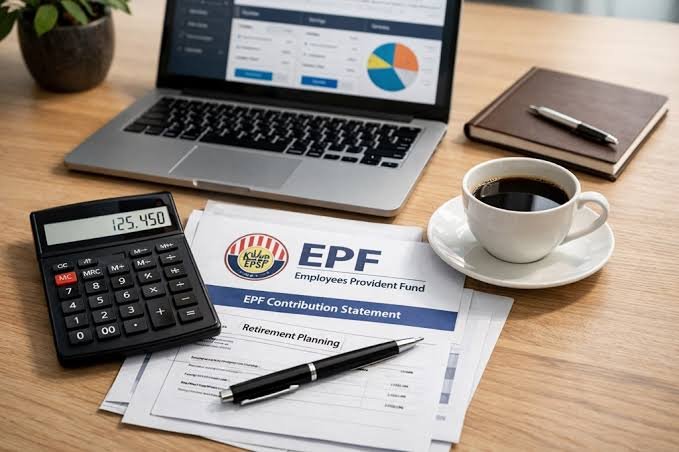
Every business in India that crosses the threshold of 20 employees is legally required to register under the Employees’ Provident Funds and Miscellaneous Provisions Act, 1952. EPF registration gives you an establishment code, enables you to file ECRs, and ensures your employees receive statutory retirement benefits. Here is a definitive walkthrough of the EPF employer registration process in 2025.

Who Needs to Register Under EPF?
- Any establishment employing 20 or more persons at any point (mandatory)
- Establishments with fewer than 20 employees can voluntarily register
- Certain industries notified by the Central Government may have lower thresholds
Once registered, even if the employee count drops below 20, the obligation to contribute does not cease automatically.
Documents Required for EPF Employer Registration
- PAN card of the establishment / company
- Incorporation certificate / Partnership deed / Shops & Establishment certificate
- Bank account details (cancelled cheque or bank statement)
- Business address proof
- Digital Signature Certificate (DSC) of the authorized signatory
- Details of all employees (name, date of joining, salary, Aadhaar, PAN)
Step-by-Step EPF Employer Registration Process
Step 1 — Visit EPFO Employer Portal
Go to the EPFO Unified Portal for Employers: unifiedportal-emp.epfindia.gov.in. Click on “Registration” under the “Establishment” menu.
Step 2 — New Employer Registration
Click “Sign Up” or “New Registration.” Select the type of establishment — Central/State Government, Exempted establishment, or Unexempted (which is the most common category for private companies).
Step 3 — Fill the Registration Form (Form 5A)
You will need to complete a detailed online registration form covering:
- Name and address of establishment
- Nature of business / industry code
- Date of commencement of business
- Total number of employees
- Owner / Managing Director / Partner details
- Bank account details for contribution remittance
Step 4 — Upload Documents
Attach scanned copies of all required documents. File size limits apply — typically 1 MB per document in PDF or JPEG format.
Step 5 — Digital Signature Verification
The authorized signatory must sign the application using a Class 2 or Class 3 DSC. If DSC is not available, Aadhaar-based e-Signing is accepted for proprietorships.
Step 6 — Submit and Track
After submission, an application reference number is generated. The EPFO regional office reviews your application, which typically takes 3–7 working days. Once approved, your establishment code (also called PF code) is issued via email.
After Registration — What Comes Next?
- Start generating UANs for all existing employees through the employer portal
- Link employee KYC (Aadhaar, PAN, bank account)
- Set up payroll to deduct 12% employee contribution from salary
- File monthly ECR (Electronic Challan cum Return) by the 15th of each month
- Remit the combined employer and employee contribution by the 15th
Frequently Asked Questions
Q: Is EPF registration mandatory if I have only 15 employees?
A: Mandatory registration kicks in at 20 employees. However, you can voluntarily register with fewer employees. Certain notified industries have lower thresholds, so check with the EPFO regional office for your industry.
Q: How long does the EPF registration process take?
A: Online applications are typically processed in 3 to 7 working days by the EPFO regional office. Complex cases or documents with discrepancies may take longer.
Q: Can I register EPF online without a DSC?
A: Yes. Proprietorships and small businesses can use Aadhaar-based e-Signing as an alternative to a Digital Signature Certificate for employer registration.
Q: What happens if I delay EPF registration after crossing 20 employees?
A: Non-registration invites penalties, prosecution, and interest on arrears. The coverage date is treated as the date you first employed 20 or more workers, and back contributions become payable from that date.
Q: Can a newly incorporated company register for EPF before hiring any employees?
A: Yes. Proactive registration is allowed and actually recommended. It ensures your PF code is ready when hiring begins, avoiding any gap in compliance.