


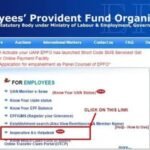
The EPFO Grievance Management System (EPFIGMS) is a powerful but underutilised tool for employees whose employers are violating EPF rules. Whether your employer is not depositing contributions, delaying your UAN generation, refusing to approve KYC, or not processing your transfer or withdrawal, the EPFIGMS portal gives you a direct channel to EPFO — bypassing the employer entirely. This guide walks you through the complete complaint filing process in 2026.
What Types of Complaints Can You File?
The EPFIGMS portal handles complaints across several categories:
- Employer not depositing EPF contributions despite deduction from salary
- UAN not generated after joining
- KYC not approved by employer despite repeated requests
- Exit date not marked after leaving the company
- Wrong wages or contribution amounts in ECR
- Claim not processed or rejected without reason
- Transfer not initiated by previous employer
- Wrong date of joining or exit recorded by employer
- Non-enrollment of eligible employees in EPF
Before Filing: Gather Your Documentation
A well-documented complaint gets faster resolution. Collect:
- Salary slips showing EPF deduction for the months in dispute
- Your UAN (find it on old payslips or via EPFO portal)
- Your employer’s PF code (on your payslip or appointment letter)
- Screenshots of EPFO passbook showing missing credits (if contribution non-deposit is the issue)
- Email correspondence with HR showing unresponsiveness (if applicable)
- Appointment letter or relieving letter (for joining/exit date disputes)
Step-by-Step: Filing a Complaint on EPFIGMS
Step 1 — Access the Grievance Portal
Visit epfigms.gov.in. This is EPFO’s dedicated grievance portal, separate from the member portal. No login is required to register a new grievance.
Step 2 — Click “Register Grievance”
On the homepage, click “Register Grievance.” You will be asked whether you are a PF member, an EPS pensioner, an employer, or “others.” Select “PF Member.”
Step 3 — Enter Your UAN and Personal Details
Enter your UAN, registered mobile number, and security PIN. The system will send an OTP to verify your identity. After OTP verification, your basic details (name, establishment) are populated automatically.
Step 4 — Select Grievance Type and Description
Choose the appropriate grievance category from the dropdown:
- “Employer Related” for contribution non-deposit, UAN, KYC issues
- “Member Account Related” for passbook, transfer, or claim issues
- “Pension Related” for EPS matters
In the description box, be specific: mention the exact months involved, the amounts in dispute, what you have already tried, and what resolution you are seeking.
Be factual and specific in your complaint description. Avoid emotional language. State facts: “EPF deducted for April-June 2025 as per salary slips but not credited in passbook.” This makes investigation faster.
Step 5 — Upload Supporting Documents
The portal allows document uploads (PDF, JPEG, up to 1 MB). Upload salary slips, passbook screenshots, or any correspondence relevant to your complaint.
Step 6 — Submit and Note Your Grievance Number
After submission, you receive a Grievance Registration Number. Save this — you will need it to track the status of your complaint.
Tracking Your Complaint
Return to epfigms.gov.in and click “Track Grievance.” Enter your registration number and mobile OTP to see the current status:
- “Under Process” — EPFO has assigned it to the concerned officer
- “Resolved” — action has been taken; check the remarks for what was done
- “Closed without resolution” — this is rare; if you disagree, you can reopen
What Happens After You File
The EPFO regional office handling your establishment reviews the complaint and:
- Sends a notice to the employer requiring a response within 15-30 days
- Verifies the facts against EPFO records (ECR filings, payment history)
- If the complaint is found valid — issues a demand notice for arrears and interest
- If employer cooperation is obtained — the correction or payment is made and the grievance is marked resolved
- If employer is unresponsive — escalates to enforcement action under Section 7A
Escalation Options If Grievance Is Not Resolved
- Reopen the grievance on EPFIGMS if you are not satisfied with the resolution
- File a direct complaint with the Regional PF Commissioner
- Email centralised grievance: grievance@epfindia.gov.in
- For senior escalation: contact EPFO Headquarters, New Delhi
- As a last resort: file a complaint with the Ministry of Labour’s Centralised Public Grievance Redress and Monitoring System (CPGRAMS)
Frequently Asked Questions
Q: Do I need to inform my employer before filing a grievance on EPFIGMS?
A: No. You can file directly without informing your employer. In fact, if your employer is actively defaulting or being uncooperative, skipping the internal route and going directly to EPFIGMS may be the more effective approach.
Q: Can I file an anonymous complaint on EPFIGMS?
A: No. EPFIGMS requires UAN verification, which means your identity is known to EPFO. However, EPFO does not automatically share complainant details with the employer — the employer receives a compliance notice, not your personal complaint.
Q: What is the expected resolution time for EPFO grievances?
A: EPFO’s internal target is 30 days for grievance resolution. Simple cases (like KYC approval nudges) may be resolved in 7-15 days. Cases involving employer default and recovery proceedings take 30-90 days or more depending on employer cooperation.
Q: Can I file a grievance even if I no longer work at the company?
A: Absolutely. Former employees can and should file grievances for periods when they were employed. Your UAN retains a link to your former employer’s establishment, allowing EPFO to investigate the specific period in question.
Q: If I file a complaint, can my employer retaliate?
A: Employer retaliation against an employee for raising a statutory complaint is illegal under Indian labour law. If you experience retaliation — termination, harassment, withholding of dues — document it and approach the labour court. In practice, most EPF complaints are handled at the institutional level without the employer knowing which specific employee complained.