



Ten years ago, claiming your provident fund meant filling paper forms in triplicate, waiting in regional office queues, and hoping your employer’s HR team would respond before the 30-day deadline passed. In 2025, a straightforward EPF withdrawal takes 3 to 7 working days, initiated from a smartphone, authenticated by Aadhaar OTP, and credited directly to a bank account — no employer signature, no physical form, no queue. The transformation is real, substantial, and still ongoing. Here is a detailed look at how Digital India has reshaped EPFO from the ground up.
The Foundation: UAN and Aadhaar Integration
The Universal Account Number (UAN), introduced in 2014, was the first structural reform that made digital EPF services possible. By assigning a single, portable number to every EPF member — one that persists across employers throughout a working career — EPFO created the infrastructure for seamless digital tracking, transfer, and claims.
The integration of Aadhaar with UAN took this further. Once a member’s UAN is seeded with Aadhaar, identity verification becomes instantaneous. The EPFO member portal and the UMANG app can verify a user’s identity against UIDAI records in real time, eliminating the need for physical document submission for most standard transactions.
The UMANG App: EPF in Your Pocket
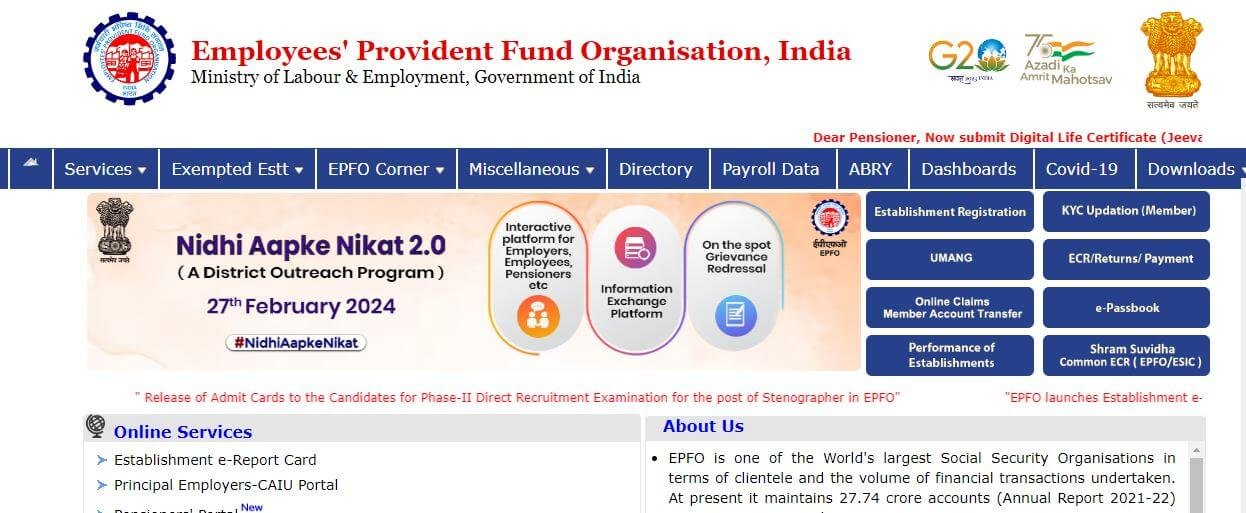
The UMANG (Unified Mobile Application for New-age Governance) app, a Government of India platform, integrates EPFO services directly into a mobile interface. As of 2025, EPFO members can do the following entirely through UMANG:
- View EPF passbook and balance
- Raise withdrawal or transfer claims
- Track claim status in real time
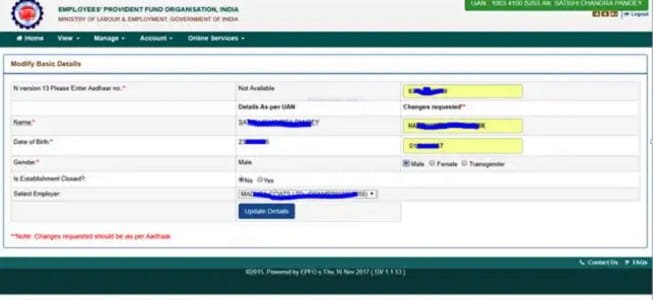
- Update KYC details
- Download UAN card
- File and update e-Nomination
The app supports Hindi and English, and EPFO has been working on regional language support to reach the large non-metro workforce. UMANG has recorded tens of millions of EPF-related transactions annually — a figure that would have been inconceivable in the paper-form era.
Centralised Processing System and Auto-Settlement
The Centralised Processing System (CPS) is arguably the most impactful backend reform. Before CPS, claim processing was decentralised — each regional EPFO office handled its own queue with no standardised timelines. CPS centralised the intake, automated eligibility verification, and enabled straight-through processing for clean claims.
By 2024, over 70% of standard EPF withdrawal claims are being auto-settled without human intervention — verified by Aadhaar, bank account confirmed via KYC, and payment triggered automatically. What once took 30-45 days now takes 3-5 business days for compliant accounts.
The Centralised Pension Payment System (CPPS)
Launched in 2024, CPPS transformed EPS pension disbursals for over 78 lakh pensioners. Before CPPS, pensioners had to bank with specific designated bank branches tied to their regional EPFO office. CPPS enables:
- Monthly pension credited to any bank account in India on the 1st of each month
- No geographic restriction — a pensioner in Chennai can bank in Shimla and receive pension seamlessly
- Automatic processing of Dearness Relief revisions without forms or visits
CPPS effectively made EPS pension as portable as a mobile number — follow the person, not the office.
AI, Data Analytics, and Fraud Detection
EPFO has been deploying data analytics to identify compliance violators and fraud patterns. Key applications include:
- Identifying employers who deduct EPF from salaries but delay or avoid remittance to EPFO
- Cross-referencing GST registration data, income tax TDS data, and ESIC employee counts with EPFO ECR filings to detect underreporting of workforce
- Flagging duplicate UANs and suspicious claim patterns that suggest identity fraud
- Using AI-assisted document verification to catch forged certificates in death claims
The integration with other government databases — particularly the Income Tax portal, MCA21 (company data), and the GSTN — gives EPFO a multi-dimensional view of employer compliance that was impossible in the paper era.
EPFO and DigiLocker
EPFO has integrated with DigiLocker, India’s national digital document wallet. Members can now store their UAN card, EPF passbook, and other EPFO-issued documents in DigiLocker — accessible from anywhere and shareable with banks, lenders, and background verification agencies as authenticated digital documents.
This has practical significance for employees who use EPF records for home loan applications, credit assessments, and employment background verification — processes that previously required physical copies.
Employer-Side Digitisation: ECR and the Employer Portal
Digitisation has not been limited to the employee-facing side. Employer compliance has been overhauled through:
- 100% online ECR filing (since 2012, with ongoing upgrades)
- Employer portal allowing UAN generation, KYC approval, and member management entirely online
- Integration with payroll software providers for direct ECR generation
- SMS and email alerts to employers for pending KYC approvals and compliance gaps
What Is Still Work in Progress
Despite significant progress, several pain points remain in 2025:
- KYC mismatch errors — name discrepancies between Aadhaar and EPFO records remain a leading cause of claim delays
- Pension claim processing still takes longer than PF withdrawals, partly due to more complex documentation
- Gig and platform worker integration — the Code on Social Security framework for gig workers has not yet been fully operationalised
- Rural and low-digital-literacy member access — many informal sector workers enrolled under EPF struggle to navigate the portal without intermediary assistance
The Road Ahead: EPFO 3.0
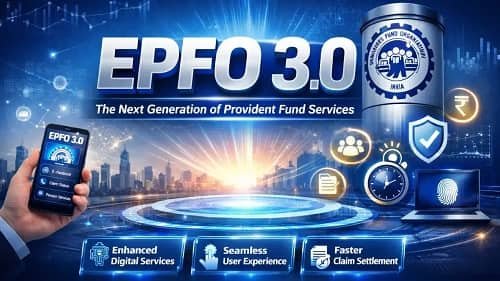
EPFO has been developing what is internally referred to as EPFO 3.0 — a full-stack digital transformation that aims for complete real-time processing, predictive compliance monitoring, and seamless social security portability. Key elements expected in 2025-27 include a fully revamped member portal, further AI integration for claim processing, and a potential move toward EPFO managing a broader social security mandate that extends to gig and informal workers under the Code on Social Security.
Frequently Asked Questions
Q: Do I need a smartphone to access EPFO digital services?
A: A smartphone with the UMANG app provides the most convenient access. However, all major EPFO services are also accessible via the browser-based member portal on any internet-connected device, including desktop computers. Basic balance inquiries are also available via missed call (9966044425) or SMS (EPFOHO UAN to 7738299899) without any smartphone.
Q: Is EPFO’s digital claim process safe against fraud?
A: EPFO’s Aadhaar-OTP authentication provides strong identity verification. The system also cross-validates bank accounts against KYC records and flags anomalous patterns. While no system is completely fraud-proof, EPFO has reported significant reduction in fraudulent claims since mandatory Aadhaar seeding was implemented.
Q: What happens if EPFO’s digital system goes down and I need to file a claim urgently?
A: In case of portal downtime, EPFO regional offices accept physical claim forms as a fallback. For urgent medical or emergency withdrawals, visiting the nearest EPFO office with complete documents is an option. EPFO also maintains an alternative SMS-based passbook service for basic account access.
Q: Can I update my bank account digitally without visiting an EPFO office?
A: Yes. Bank account updates can be done through the EPFO member portal under the KYC section — log in, add your bank account and IFSC code, and submit for employer approval. Once the employer approves and EPFO verifies, the new bank account is linked to your UAN within a few days.
Q: Has EPFO integrated with the Income Tax portal for automatic 80C deduction reflection?
A: Your EPF contribution data flows through your employer’s Form 16, which is then pre-filled in the Income Tax e-filing portal’s ITR. Direct API integration between EPFO and the IT portal for real-time deduction reflection is part of the broader e-governance roadmap but has not been fully implemented as of 2025.